Early Forest Fire Detection
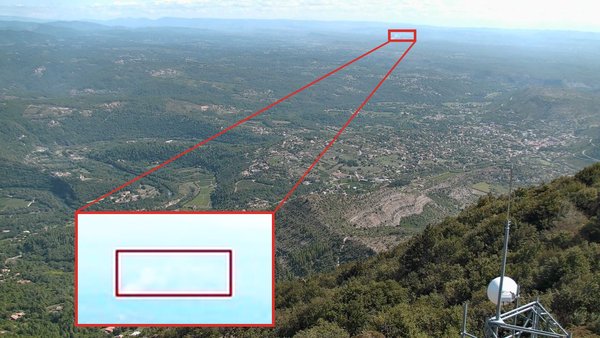
Democratize open and low-tech solutions for fighting wildfires, for the benefit of the ecosystems and the citizens.
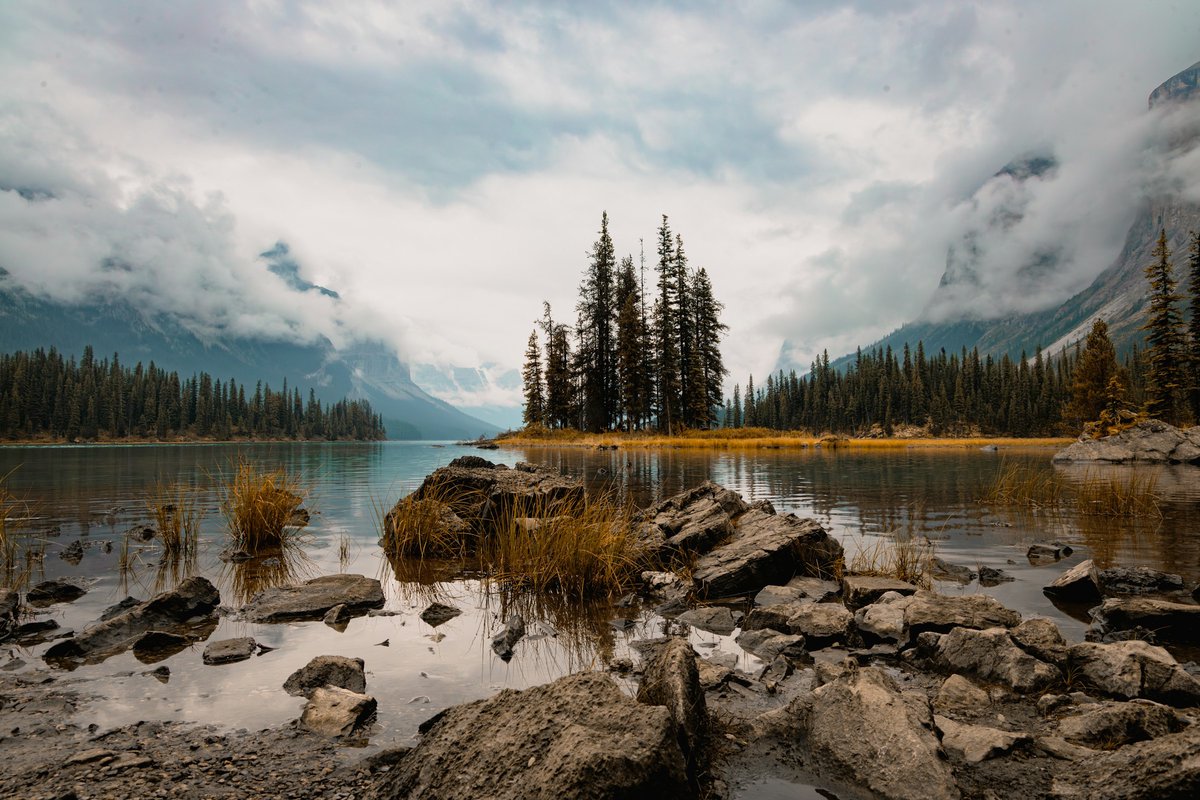
Democratize open and low-tech solutions for fighting wildfires, for the benefit of the ecosystems and the citizens.
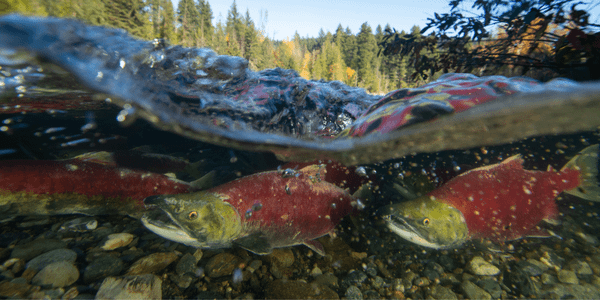
The project monitors wild salmon migration to ensure the number passing through meets state regulations, addressing threats from human activities like fisheries and dams.
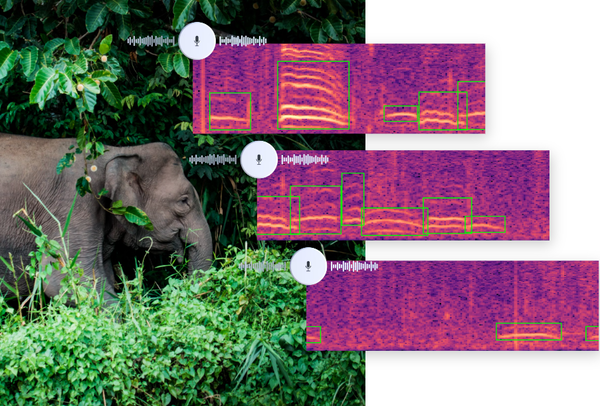
Conservation efforts struggle to monitor forest elephants in dense rainforests, with acoustic monitoring providing a promising solution via accurate, user-friendly detection systems that aid in population monitoring and anti-poaching efforts while mitigating human-elephant conflicts.
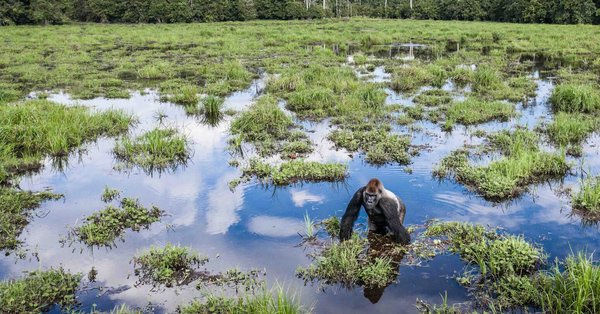
A backend engineering mission with the EarthRanger team at Ai2, separating read and write query paths, partitioning the database, and speeding up the APIs that power real-time conservation across 900+ protected areas.
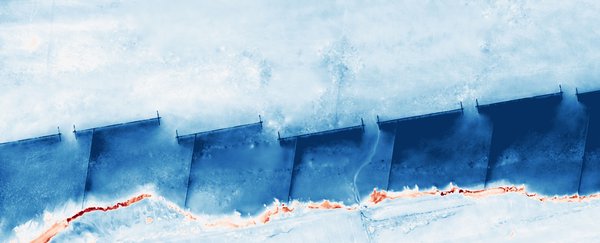
Drone-based monitoring of coastal erosion, sedimentation and land cover change on the Wadden Sea coast, served through an interactive web portal.
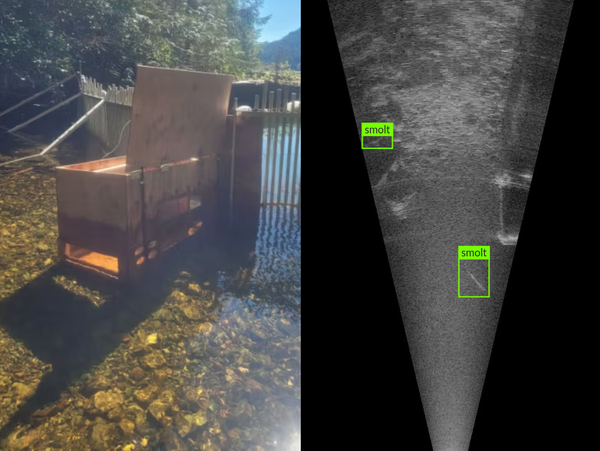
An innovative use of sonar imagery to monitor and analyze the migration patterns of smolt salmon as they journey from freshwater to the ocean
Software we build with field teams, from free downloads to hosted services. Explore each one and try it for yourself.
Democratizing open and low-tech solutions for fighting wildfires. An early detection solution that is open source, efficient, automatic, energy-efficient, economical and modular.

Underwater cameras, sonar and drones combined with innovative AI technology to enable precise and automated salmon counting in rivers.
Open-source desktop app for analyzing camera trap data. Runs 100% locally, so your sensitive wildlife data never leaves your computer.




We absolutely love working with you. You are incredibly professional. They trained our latest model and achieved outstanding performance, setting a new benchmark. They also implemented the MLOps pipeline!
 Mateo Lostanlen
Co-founder and CEO, Pyronear
Mateo Lostanlen
Co-founder and CEO, Pyronear
It has been an absolute pleasure working with you on SalmonVision. Your diverse skillset, ability to be forward thinking, and work with our team of collaborators was essential to the success of our project. We really couldn't have done it without you! I hope we can continue working together to improve and expand the tools offered by SalmonVision over the coming years.
 Will Atlas
Salmon Watershed Scientist, Wild Salmon Center
Will Atlas
Salmon Watershed Scientist, Wild Salmon Center
I am very excited for what is ahead, there is so much potential in the work that's been done. Your hard work and passion have really shone through!
 Yohan Runhaar
CTO, ReefSupport
Yohan Runhaar
CTO, ReefSupport
They really helped us by training a YOLOv8 model for our system to prevent human-bear-conflicts. He thinks along well, knows what he is talking about and is a nice person to work with!
 Thijs Suijten
Co-founder & CTO, HackThePlanet
Thijs Suijten
Co-founder & CTO, HackThePlanet
There is definitely a want and need from the conservation community to work with people like you, with your expertise, as the technical side to this type of development is often the barrier.
 Melanie Clapham
Director & Conservation Scientist, The BearID Project
Melanie Clapham
Director & Conservation Scientist, The BearID Project
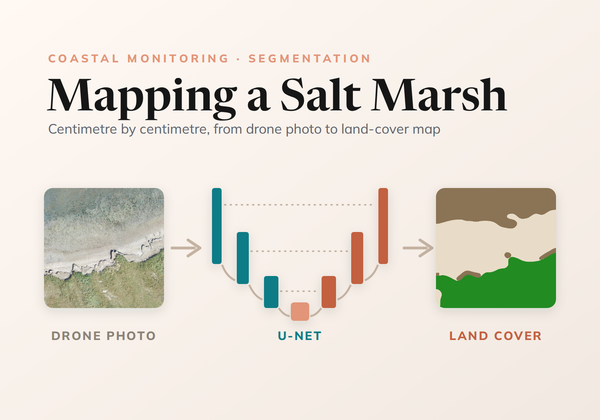
How we trained a U-Net to map land cover on the Wadden Sea coast from drone photos, from ecologists' labels at any level of detail to a seamless map of every survey.
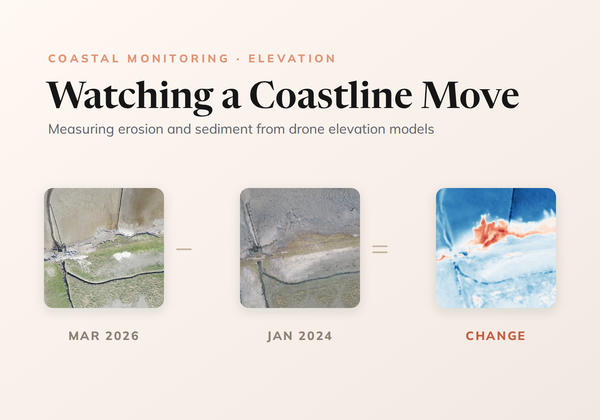
How CODAP measures erosion and sedimentation on the Wadden Sea coast by differencing drone elevation models, cleaning out the noise without losing real change, and reading the result with transects.
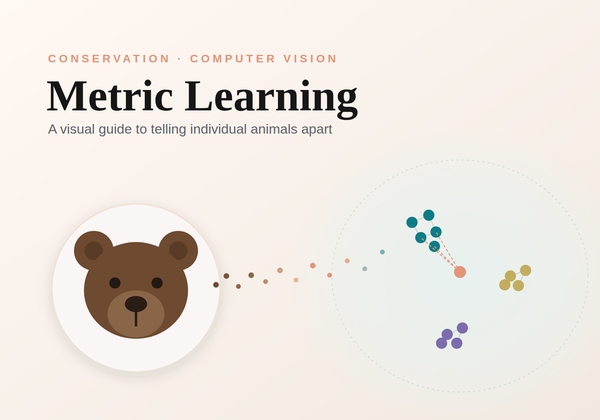
An intuition-first, visual guide to metric learning and how machines learn to tell individual animals apart for conservation re-identification.
Support our work
Support our work or partner with us, and help bring conservation technology to the field teams who need it.