

On this page
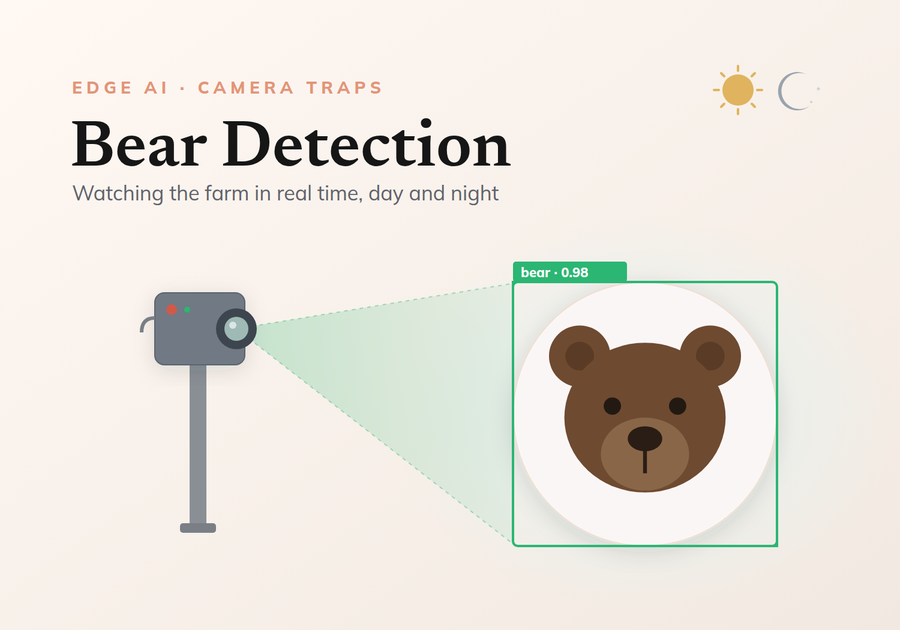
In this post, we’ll walk through the development of a real-time bear detection system, built with the NGO HackThePlanet to safeguard Romanian farms by deterring bears.
Implementing non-invasive methods to deter bears from approaching farms and livestock holds promise in fostering harmonious relations between humans and bears.
For the full picture, here is the bear deterrence pipeline. Tap through for the project:
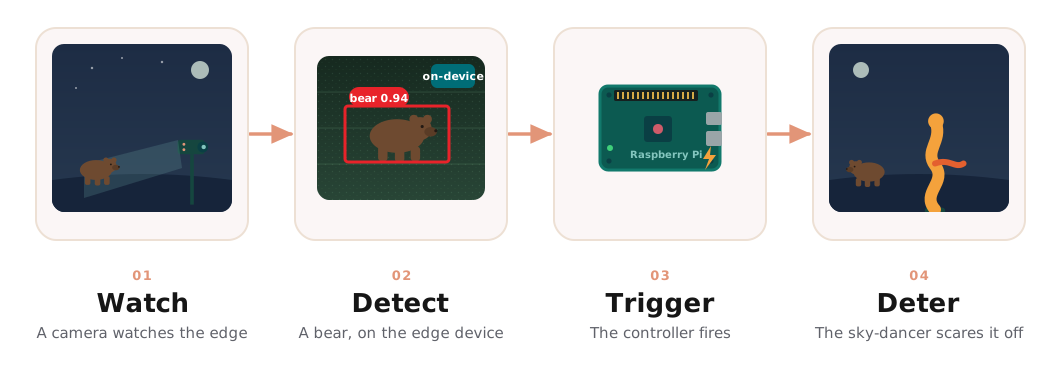 Watch → detect the bear on-device → trigger → deter it from the farm
Project Scope
The detection model runs on a low-power microcontroller (a Raspberry Pi 5), so it has to be fast and frugal at inference. Catching an approaching bear in time is critical (a bear on the farm can prey on livestock like pigs), so recall has to be very high. And since bears are active day and night, the system runs around the clock.
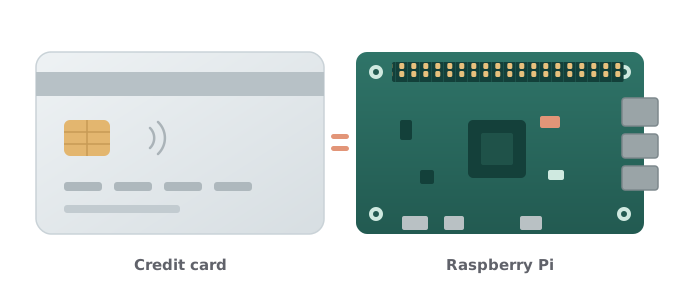 A Raspberry Pi is no bigger than a credit card, small and low-power enough to run at the farm’s edge
A low false-positive rate matters just as much, for two reasons: false alarms erode farmers’ trust in a system they rely on daily, and each one needlessly fires the power-hungry bear-deterrent.
Provided Dataset
We have amassed a collection of camera trap images captured over the past years from forests near the farms in Romania.
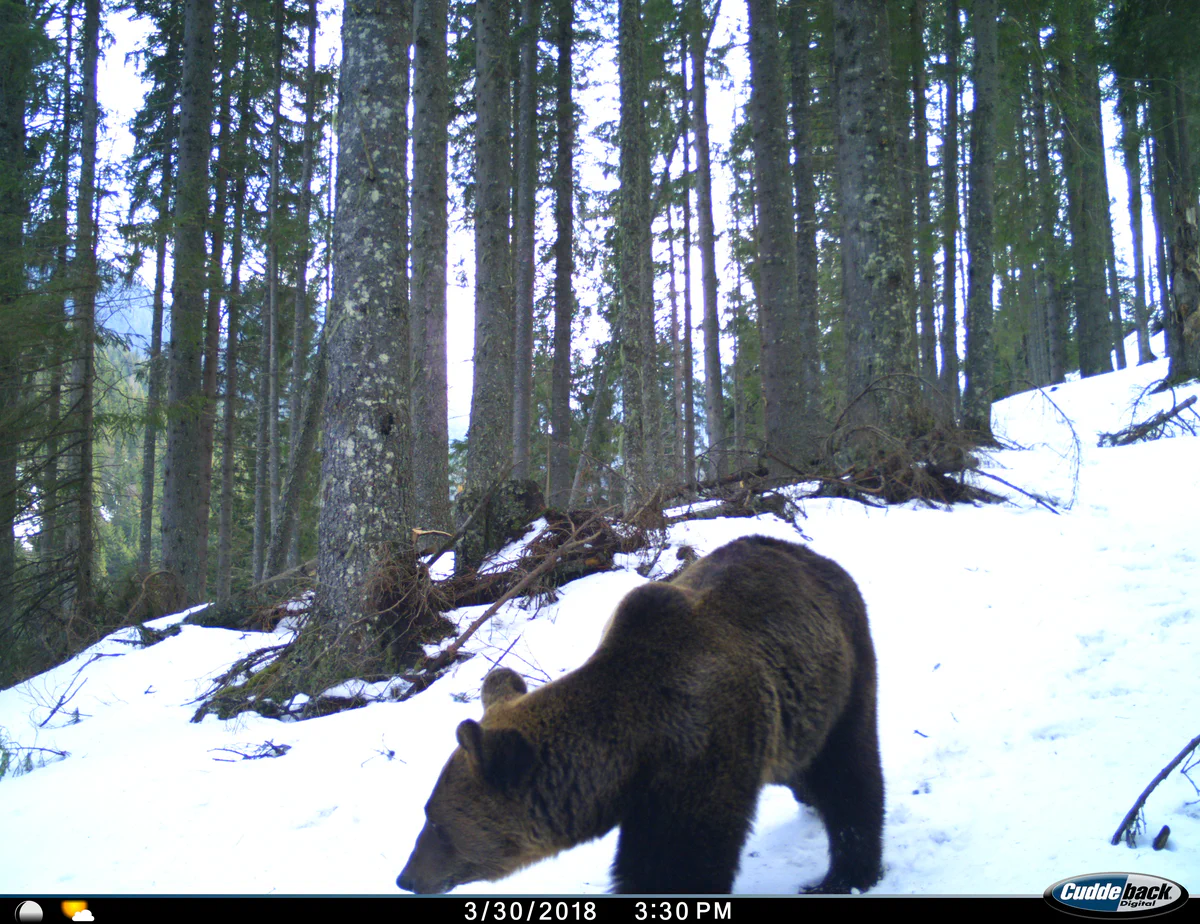
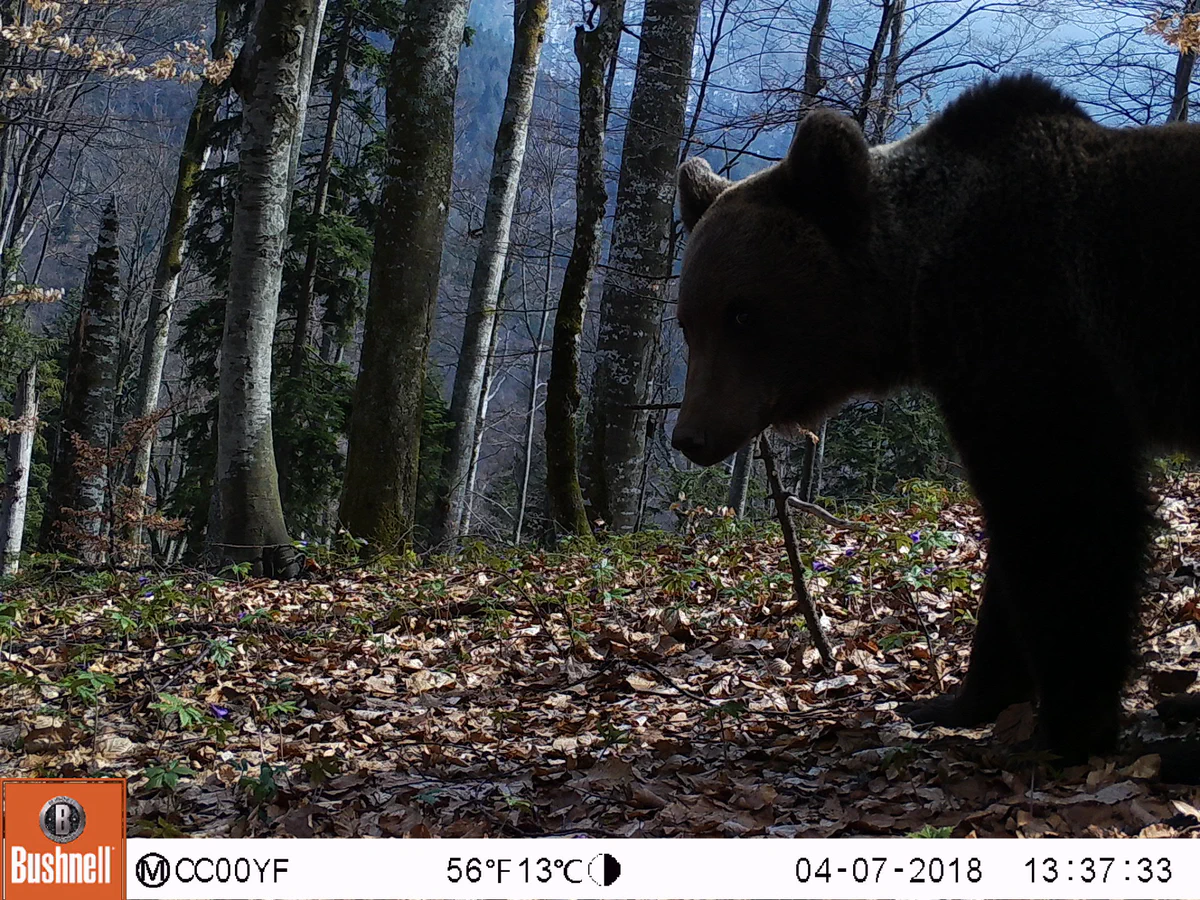
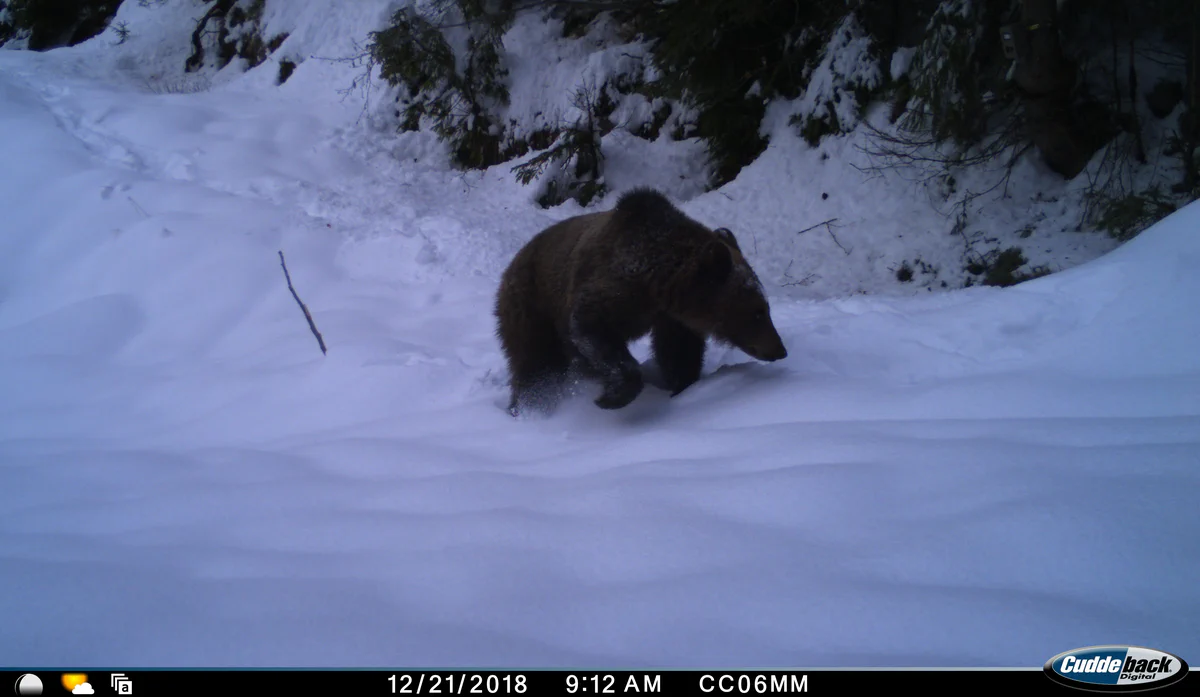
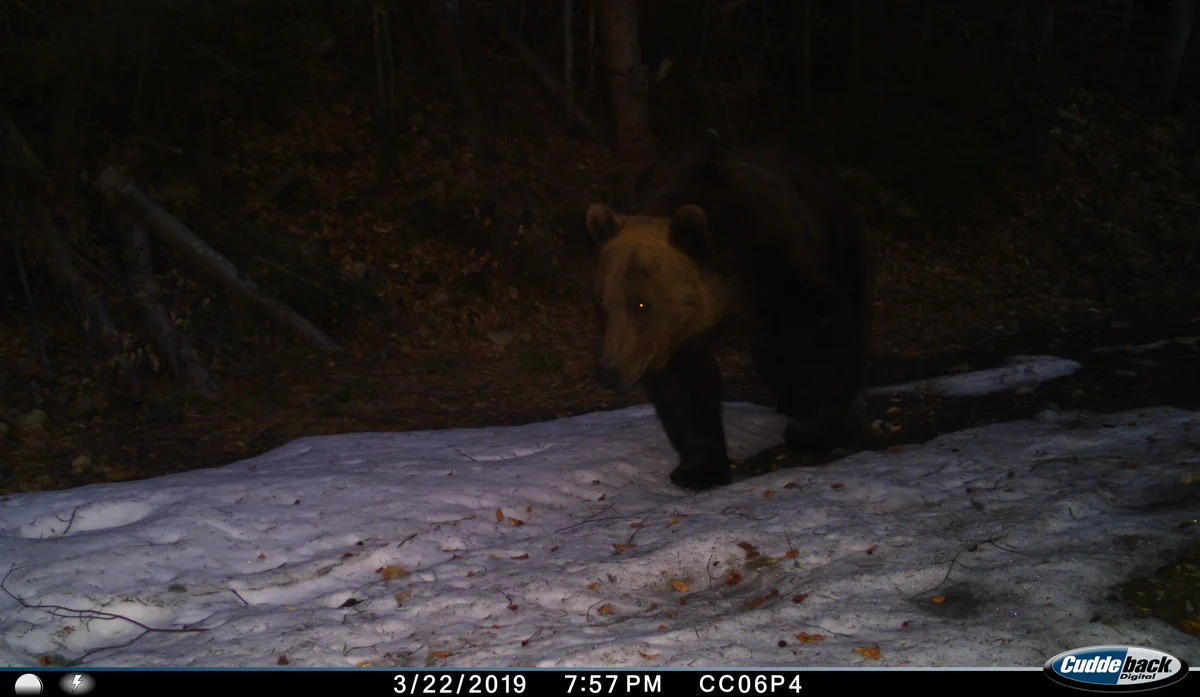
Camera Traps
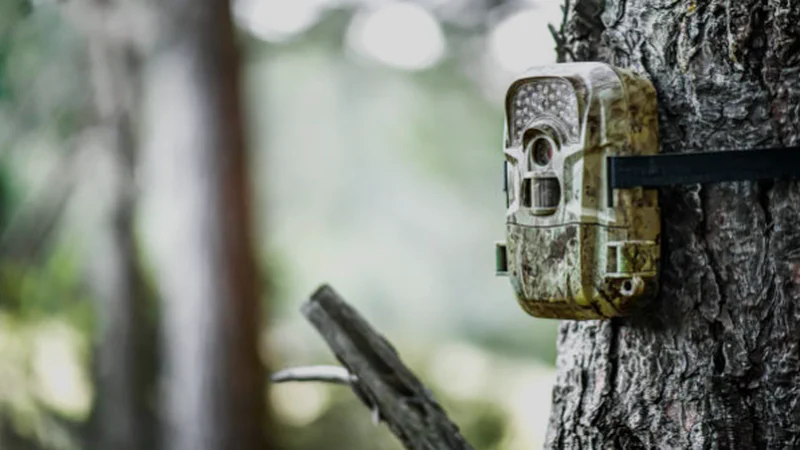
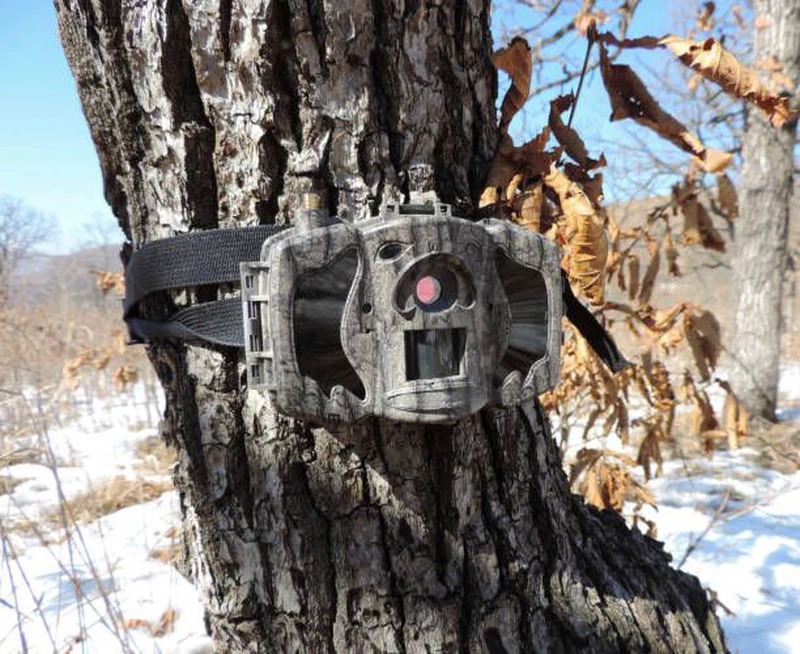
Camera traps have transformed wildlife research: a camera paired with a motion sensor collects data without anyone present, capturing animals with minimal disturbance. From the Arctic tundra to tropical rainforests, they’ve become an affordable, indispensable tool for studying a huge range of species.
Exploratory Data Analysis
Before modelling, we explored the dataset closely, and it surfaced several data-quality issues worth fixing first.
Data quality issues
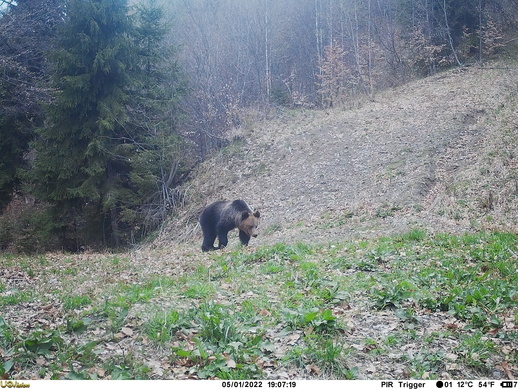
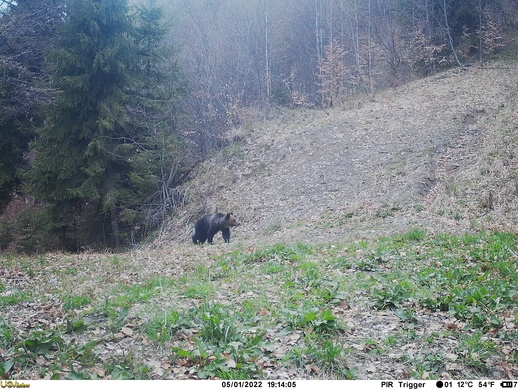
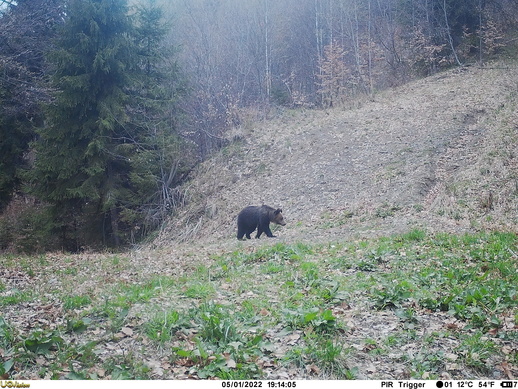
Bursts of Images
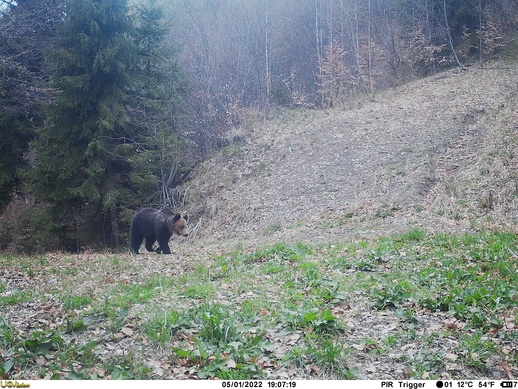
When its motion sensor fires, a camera trap records a burst of frames, many near-identical shots of the same animal. These bursts must be kept together during the data split; otherwise near-duplicates leak across train and test, and the model overreports its performance.
Corrupted Images
A sizeable share of the camera-trap pictures were corrupted and wouldn’t load. We couldn’t recover them, so they had to be discarded.
Class imbalance
The dataset skews heavily towards bears (roughly five times more bear images than other animals or empty frames), which biases a model towards the majority class. Three techniques can help rebalance it:
Oversampling
Duplicate or synthesise extra examples of the minority class to even out the counts.
Undersampling
Randomly drop examples from the majority class to balance the distribution.
Data augmentation
Add small variations to minority-class images, our most effective option here.
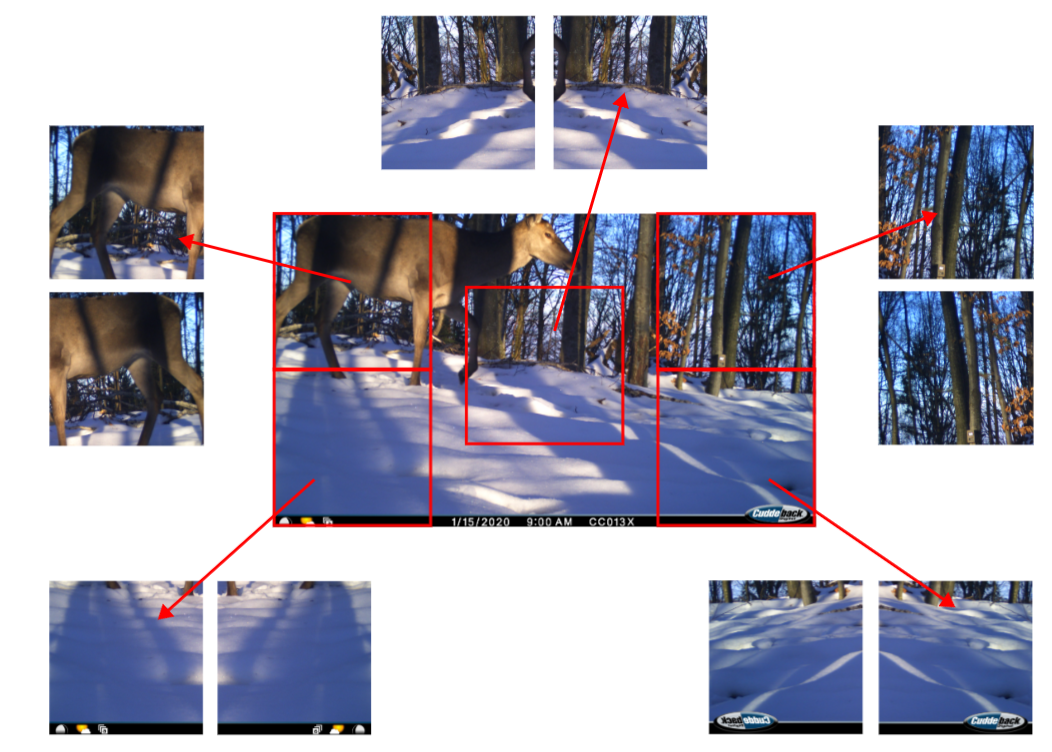 Data augmentation / TenCrop: generate 10 images from one to mitigate the class imbalance
In our experiments, augmenting the empty frames and other-animal images worked best: it kept plenty of bear images while adding variety to the rest.
Data Annotation
To annotate our dataset, we evaluated two machine learning models: MegaDetector and GroundingDINO. In our decision to train an object detector, the annotation process for each image captured by the camera traps should include generating bounding boxes that outline the location of each detected bear: (x, y, width, height).
Both models found bears in the camera-trap images, but GroundingDINO, prompted with “bear”, was more accurate, with fewer false positives and negatives, so we used it to generate the dataset.
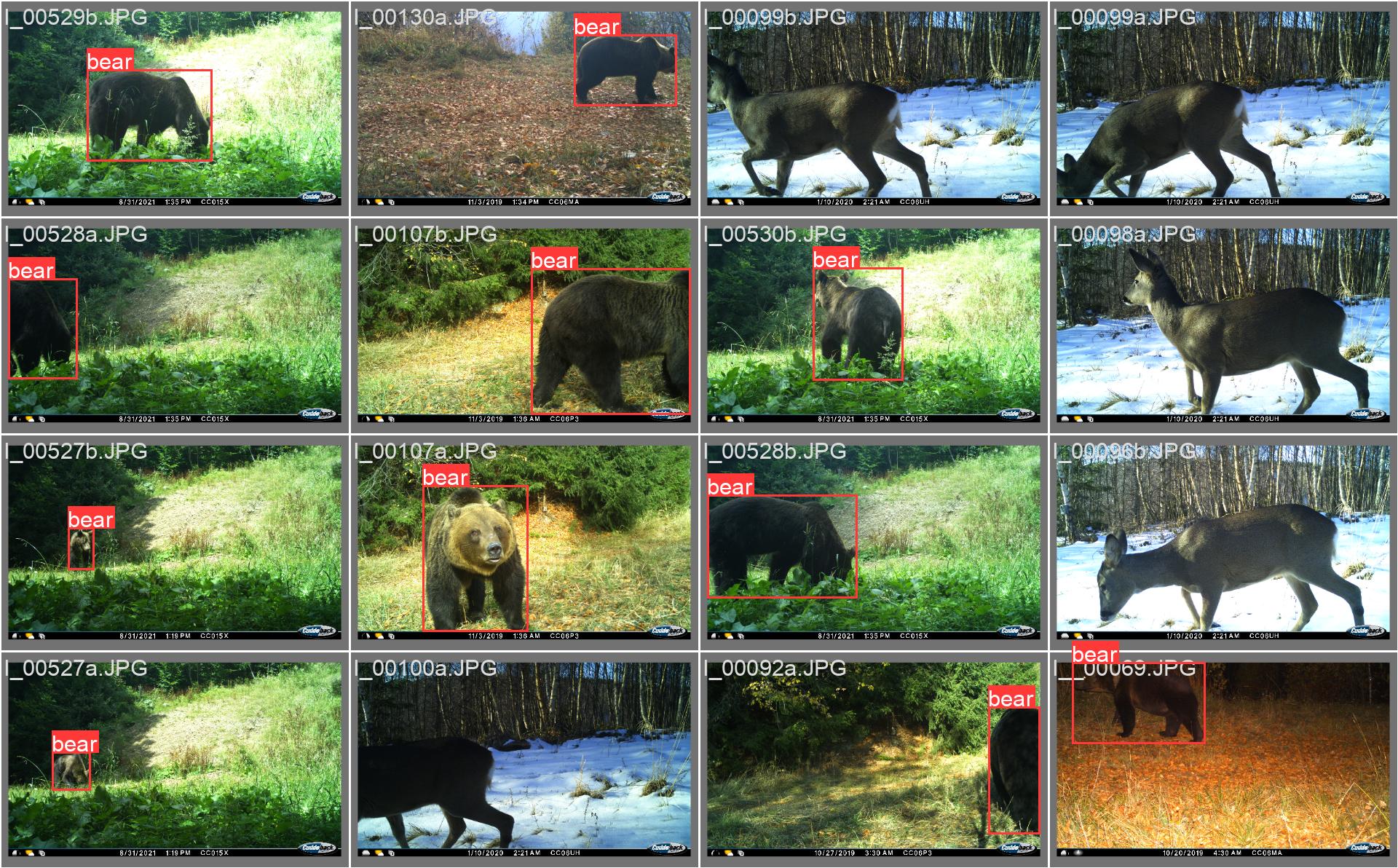
Note: MegaDetector and GroundingDINO, while effective for object detection and image understanding, are not suitable for low-power, real-time applications due to their large size and high computational requirements. However, we can leverage these existing models to curate the dataset used for training our machine learning model.
MegaDetector
MegaDetector is a camera-trap animal detector from Microsoft AI for Earth, built to localize animals, including rare species, across large-scale monitoring datasets.
GroundingDINO
 GroundingDINO is a multimodal model that combines a Vision Transformer
(ViT) with language grounding. By tying a text prompt to visual features, it
detects and localizes objects from a free-text description rather than a fixed
list of classes, so prompting it with "bear" is enough to label the dataset.
GroundingDINO is a multimodal model that combines a Vision Transformer
(ViT) with language grounding. By tying a text prompt to visual features, it
detects and localizes objects from a free-text description rather than a fixed
list of classes, so prompting it with "bear" is enough to label the dataset.
Data Modeling
Data split
We split the annotated dataset 80/10/10 into train, validation, and test. To avoid leakage, we partitioned by camera reference and capture date (from each picture’s EXIF metadata), keeping a camera’s bursts together in one split.
Image Classification vs Object Detection
There are two ways to frame this. As image classification, we’d simply predict whether an image contains a bear. As object detection, we’d predict bounding boxes around any bears in the image.
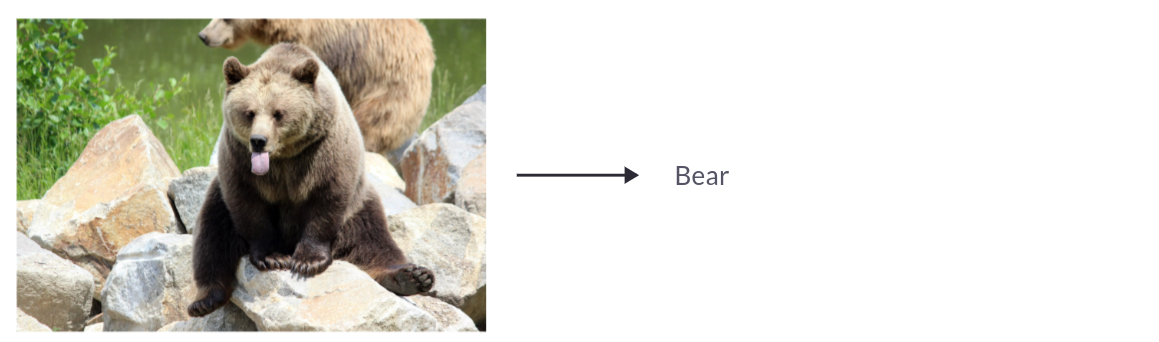 Image classification: one label for the whole image
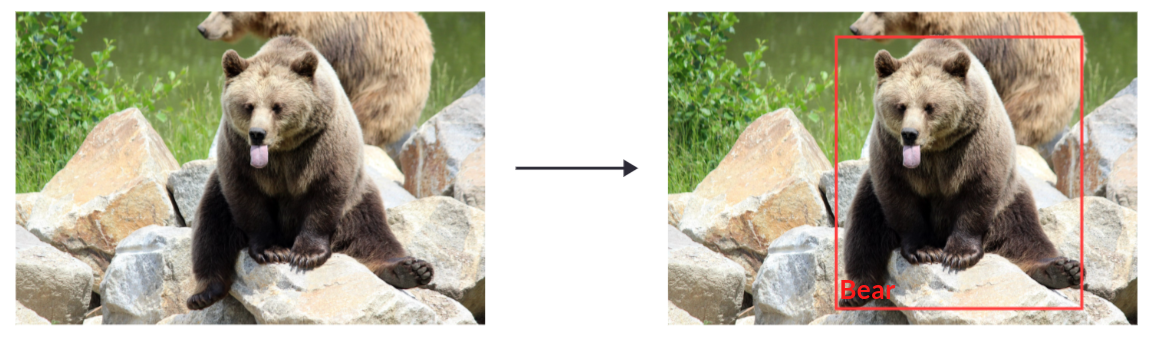 Object detection: a bounding box around each bear
We started with classification, but the model learned to cue off the fixed camera-trap backgrounds rather than the bears themselves, which would hurt generalization in the field. Reframing it as object detection fixed that and performed better.
YOLOv8
Overview
We took a pretrained YOLOv8 model and fine-tuned it for our object detection task. YOLOv8 is fast, accurate, and easy to work with, and it handles a range of tasks: object detection, tracking, instance segmentation, image classification, and pose estimation.
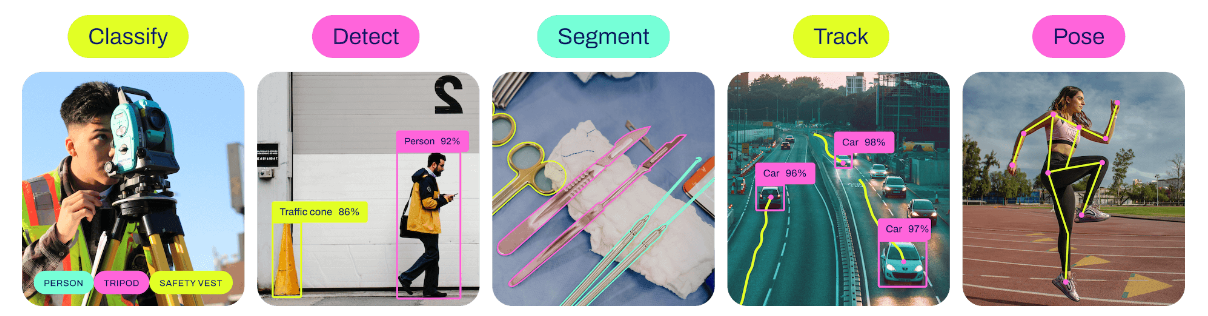 YOLOv8 Computer Vision Tasks
Model size
As we aim to deploy our solution on a low-power microcontroller, we selected
the most compact variant of YOLOv8, known as the 'nano' version or 'YOLOv8n'.
The table below illustrates the tradeoff between model size (a proxy for
accuracy) and processing speed.
| Model | size (pixels) |
mAPval 50-95 |
Speed CPU ONNX (ms) |
Speed A100 TensorRT (ms) |
params (M) |
FLOPs (B) |
|---|---|---|---|---|---|---|
| YOLOv8n | 640 | 18.4 | 142.4 | 1.21 | 3.5 | 10.5 |
| YOLOv8s | 640 | 27.7 | 183.1 | 1.40 | 11.4 | 29.7 |
| YOLOv8m | 640 | 33.6 | 408.5 | 2.26 | 26.2 | 80.6 |
| YOLOv8l | 640 | 34.9 | 596.9 | 2.43 | 44.1 | 167.4 |
| YOLOv8x | 640 | 36.3 | 860.6 | 3.56 | 68.7 | 260.6 |
Training
We trained for 200 epochs, tracking mean IoU, box precision, and box recall on the validation set throughout. To improve robustness, we applied the usual augmentations: horizontal flips, random crops, mosaic aggregation, rotation, colour jitter, and more.
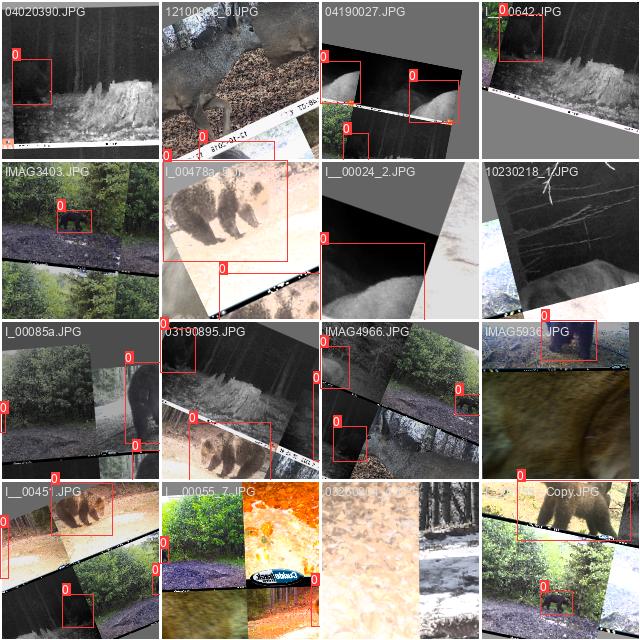 Data augmentation during training: mosaic, rotation, and more
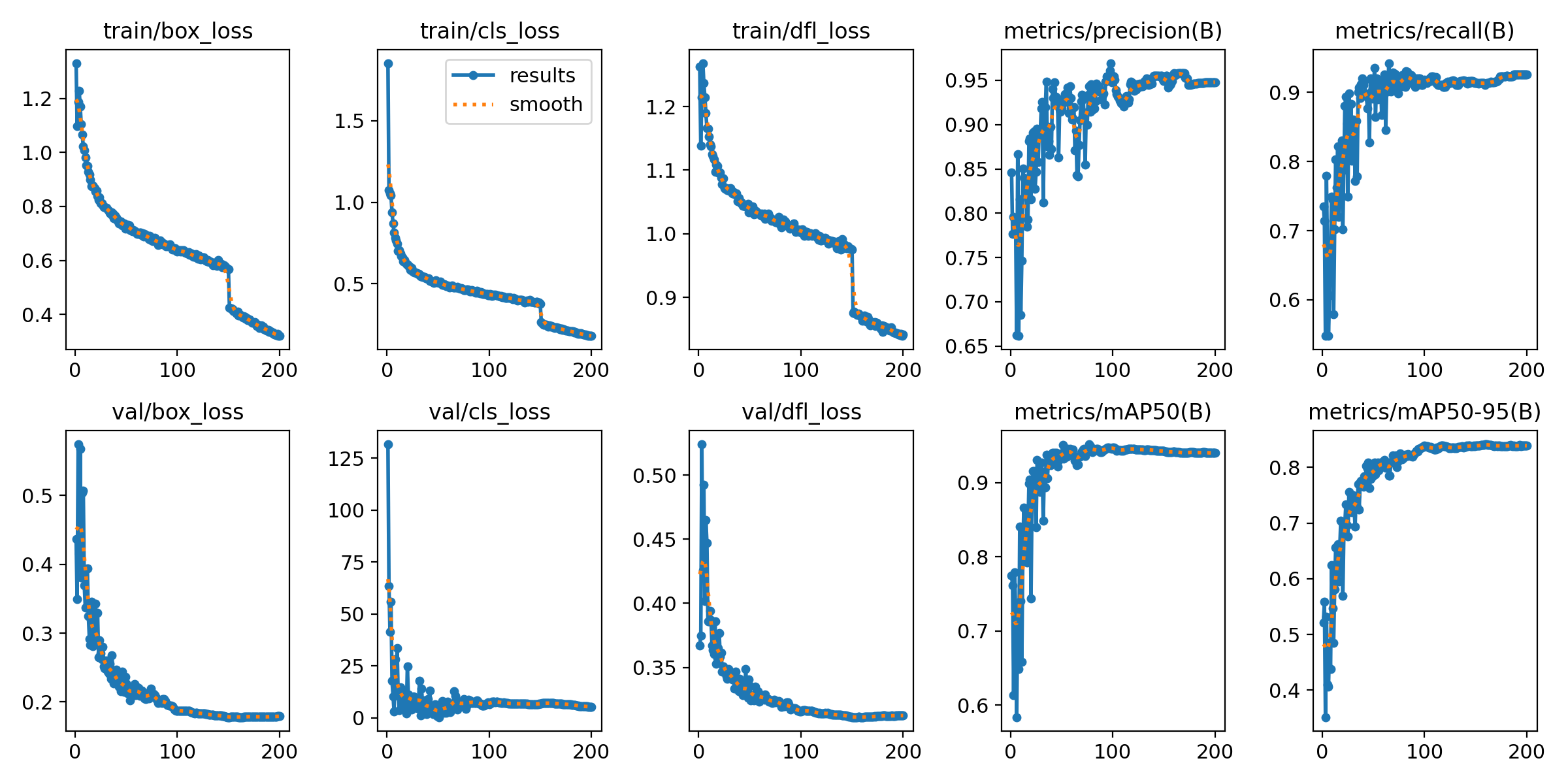
Evaluation
On the test set we report a confusion matrix, treating the model as a binary classifier: if its best bear detection clears a probability threshold, the image counts as containing a bear.
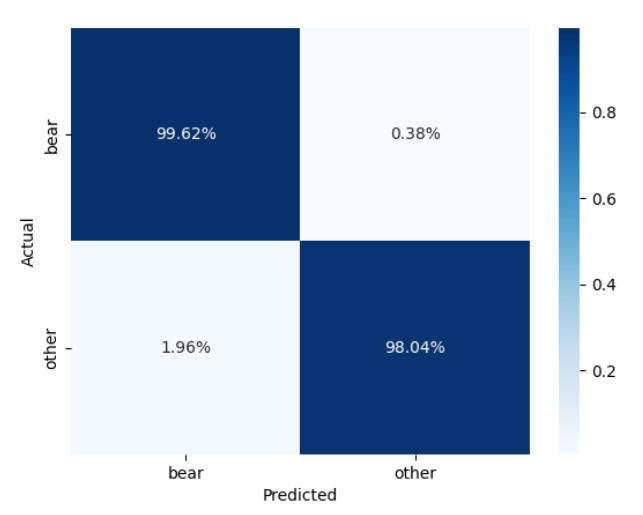 Confusion Matrix Normalized - imgsz 1024
Inference Speed vs Model Accuracy
Running in real time forces a tradeoff between speed and accuracy: a larger model on the full frame is more accurate but slower. Weighing the two was key to picking the right model.
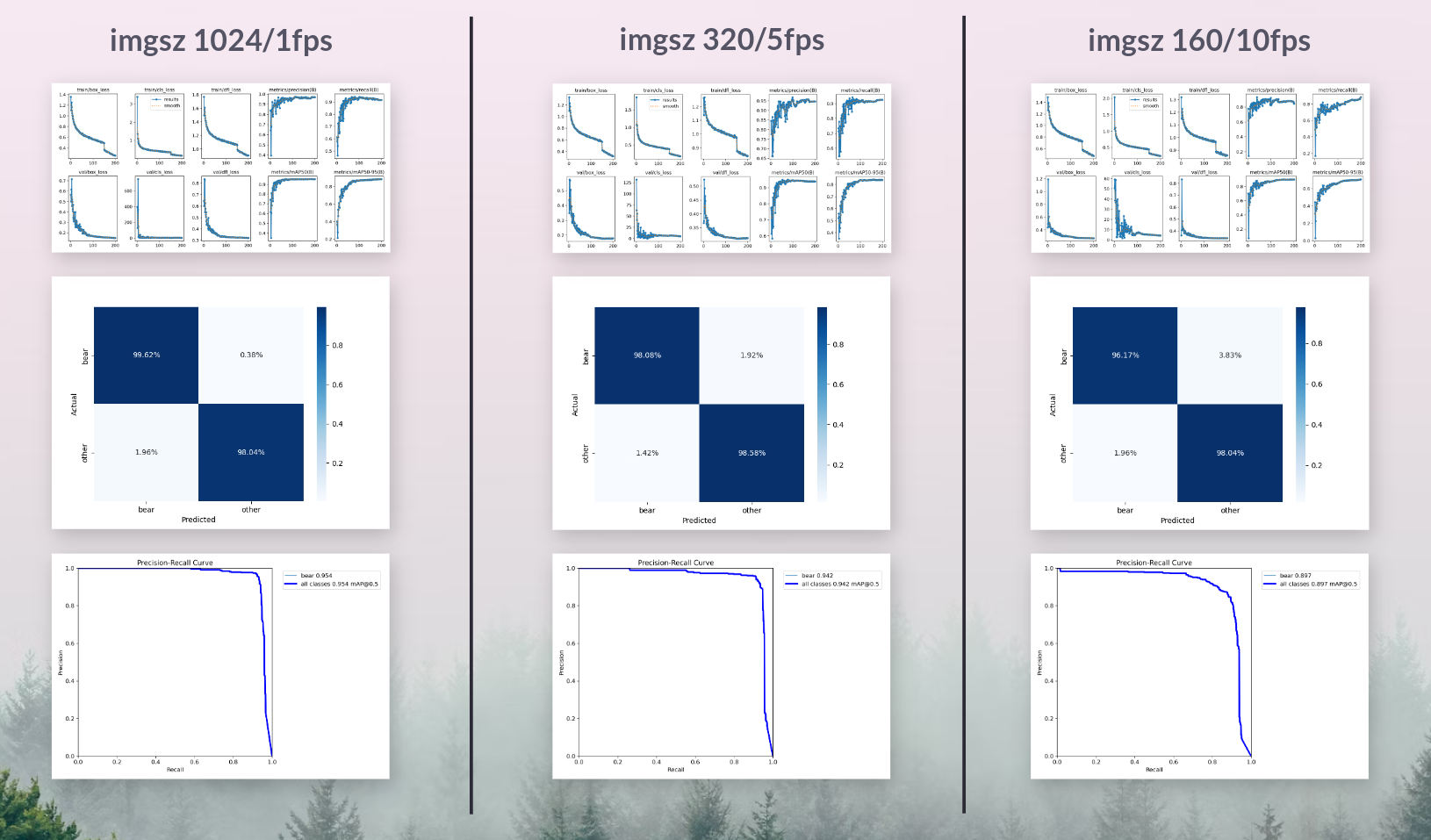 Inference speed and model accuracy tradeoff on the Raspberry Pi 5
Conclusion
We’ve walked through building a real-time bear detector: cleaning up the dataset, using GroundingDINO to annotate it quickly, and balancing speed against accuracy to land on a model that runs on a low-power device. The same approach extends well beyond bears to other human-wildlife conflicts.
Explore the project
Try the detector on real camera-trap images, or dive into the full Carpathian bear deterrence project and how it works in the field.