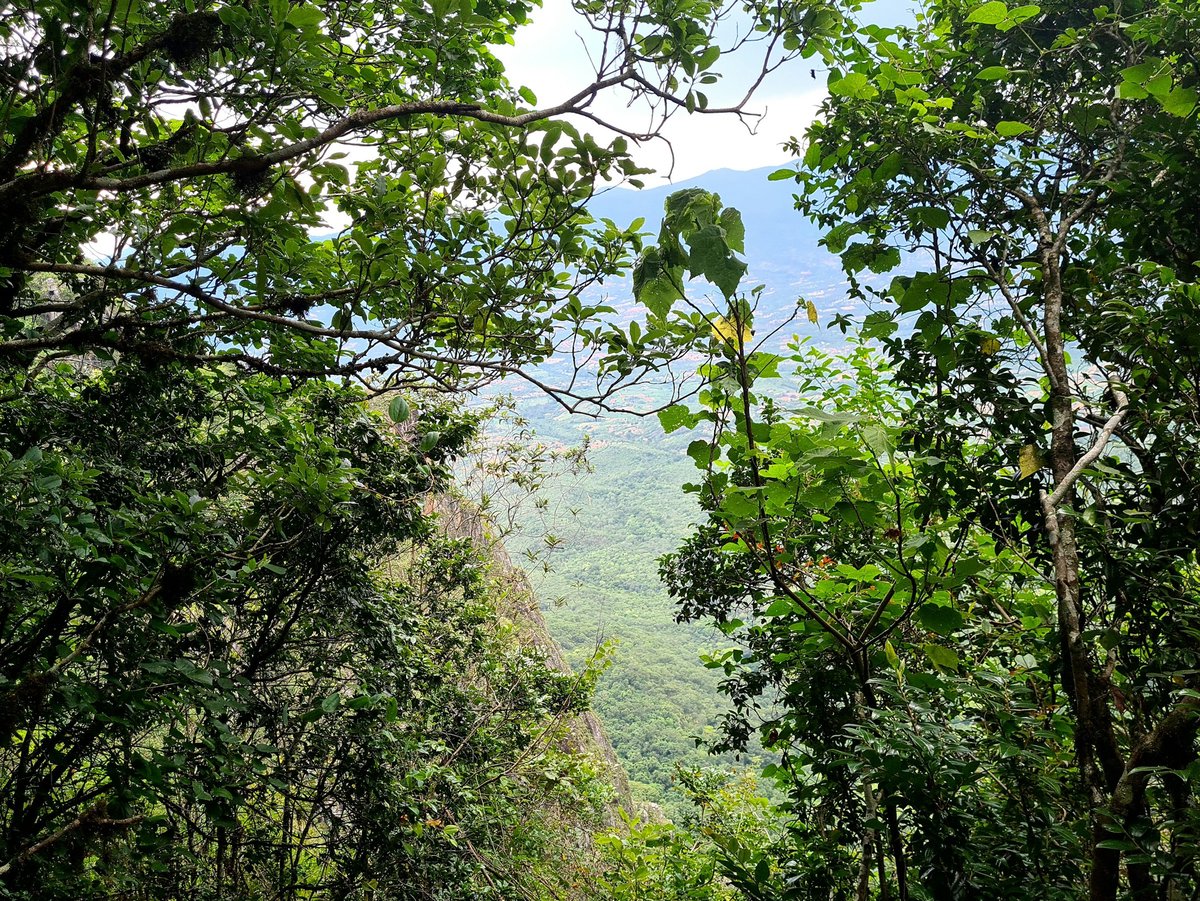
The Congolian rainforests are the world’s second-largest tropical forest after the
Amazon, covering about 2 million square kilometres across seven countries, from
Cameroon and Gabon to the Democratic Republic of the Congo.1
They
hold a quarter of the world’s remaining tropical forest.1
Why they matter
More than 10,000 plant species grow here, 30% of them found nowhere else, alongside
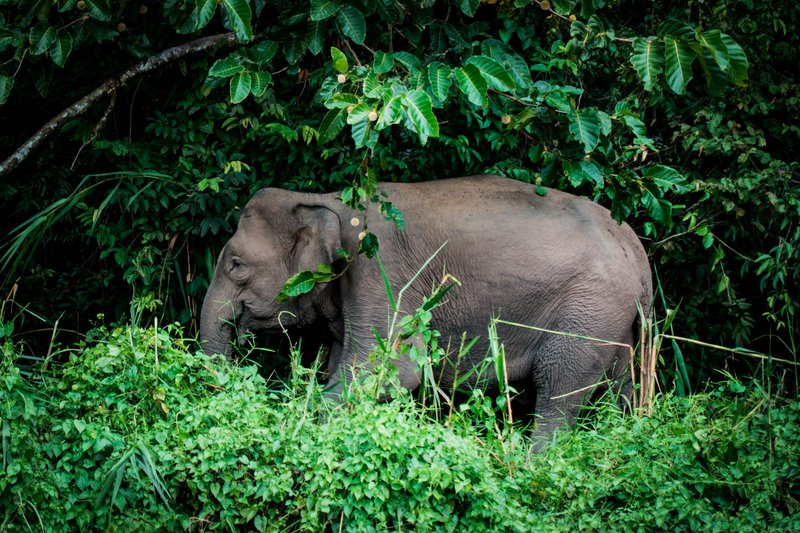
over 400 mammals, 1,000 birds and 700 fish, including gorillas, chimpanzees, bonobos
and African forest elephants.1
Under pressure
Commercial logging, oil palm plantations and mining are cutting up the forest, and
the bushmeat trade and poaching are emptying it of wildlife.1
Deforestation doubled between 2015 and 2019.1
What we do
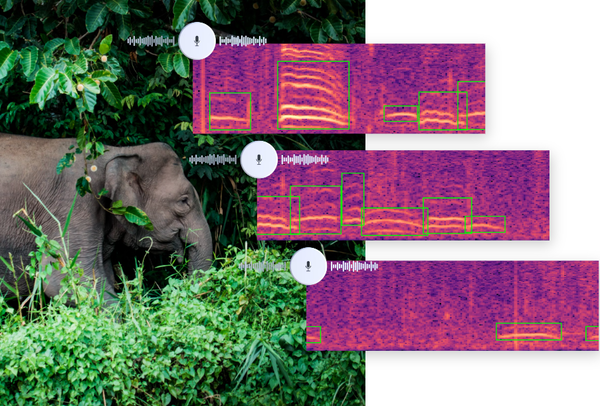
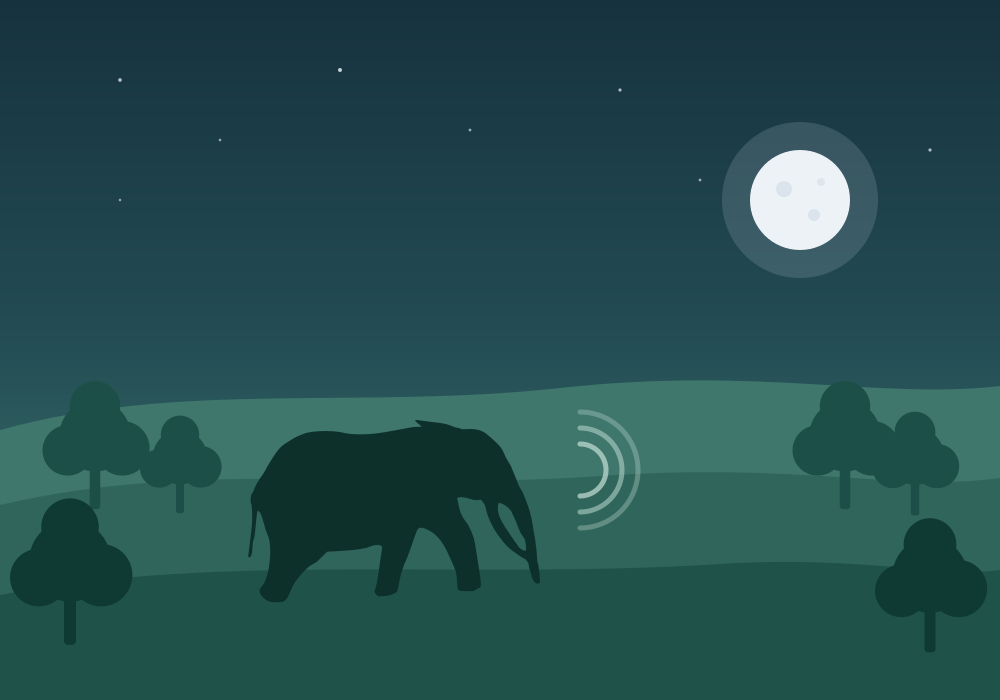
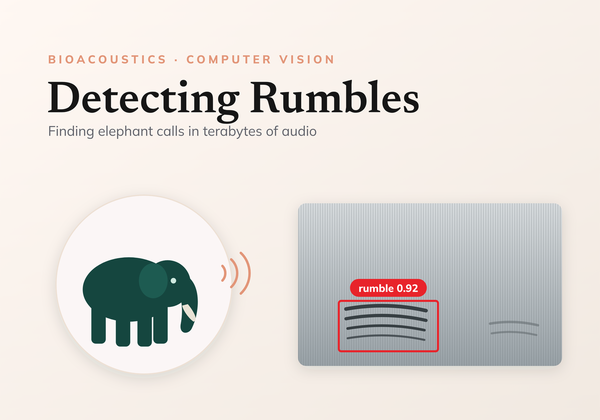
In dense forest, animals are far easier to hear than to see. Our
acoustic monitoring work listens
for forest elephant rumbles, and for gunshots, across months of recordings, to show
where elephants move and where they are at risk.
Conservation efforts struggle to monitor forest elephants in dense rainforests, with acoustic monitoring providing a promising solution via accurate, user-friendly detection systems that aid in population monitoring and anti-poaching efforts while mitigating human-elephant conflicts.
Every project here was built hand in hand with conservation partners, and much of the code is open source. If our work fits a challenge you're facing, or you'd like to build something together, we'd love to hear from you.