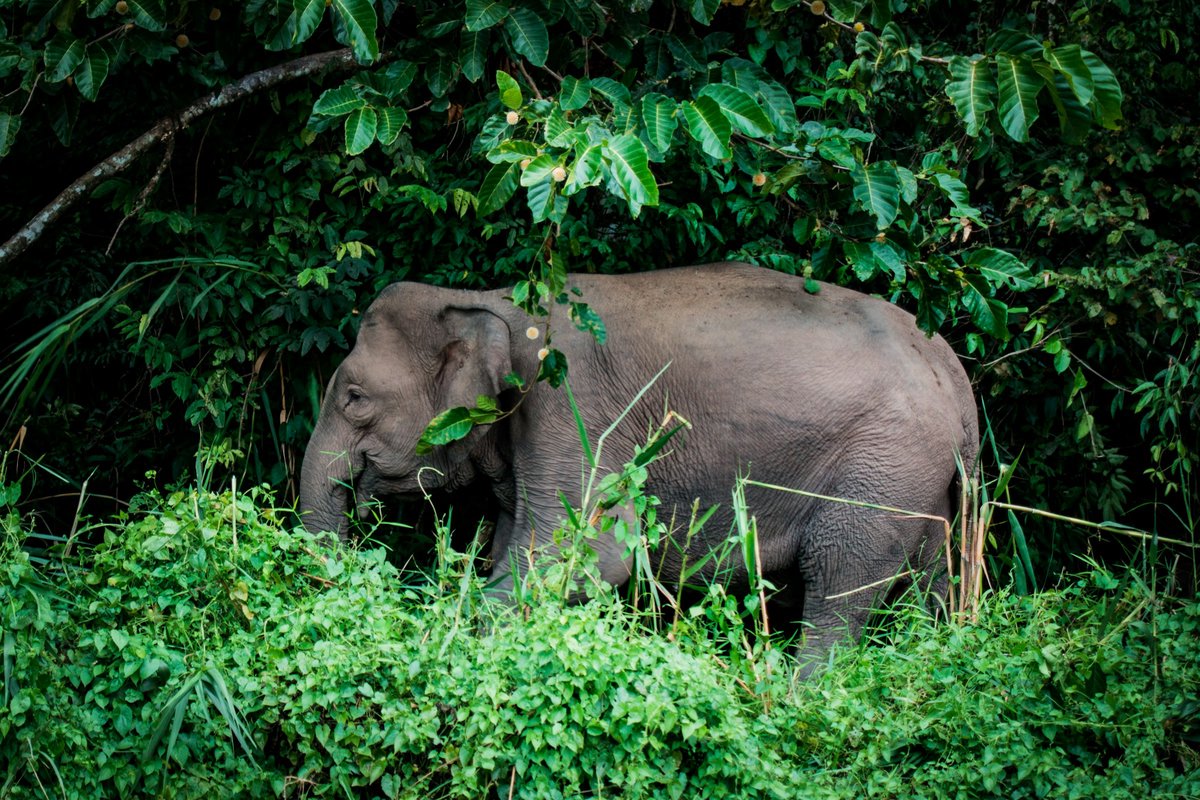
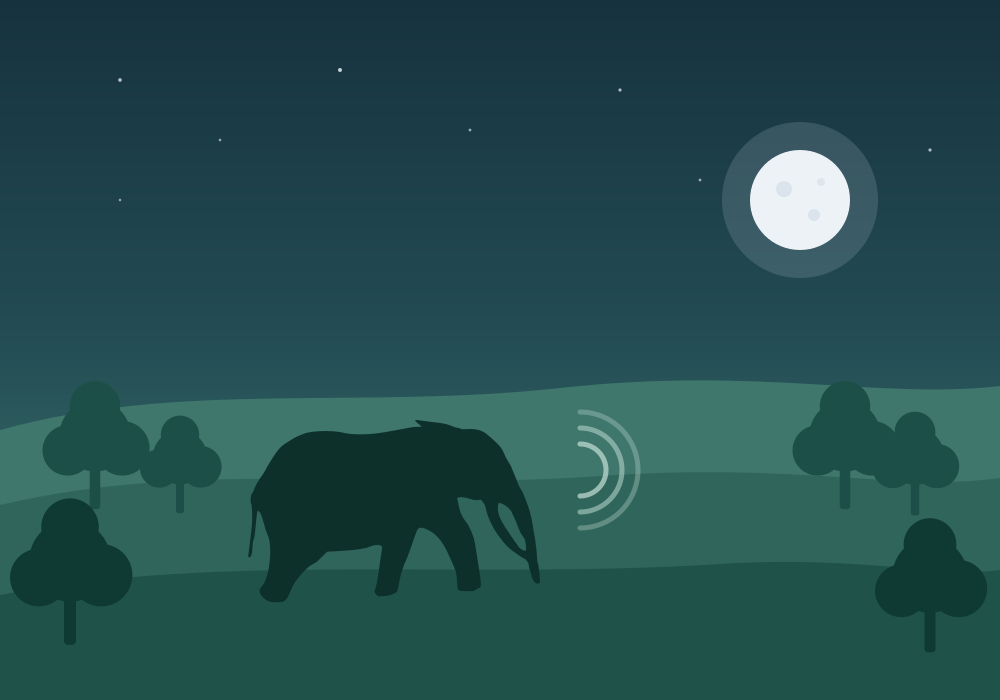
The African forest elephant lives in the humid tropical forests of West Africa and
the Congo Basin, and is considerably smaller than its savanna cousin.2
Numbers have fallen from around 700,000 to fewer than 100,000 over several
decades,2
and in 2021 the species was listed as Critically
Endangered.1
Gabon
holds the largest stable population.2
Why it matters
Forest elephants are the gardeners of the rainforest. They swallow large fruit and
carry the seeds more than 5 km before dropping them, and 14 of 18 megafaunal tree
species studied depend on them to spread.2
Protecting them also
helps the forest keep storing carbon.2
Under pressure
Poaching for ivory and bushmeat is a major threat across Central Africa, alongside
forest cleared for plantations and settlements.2
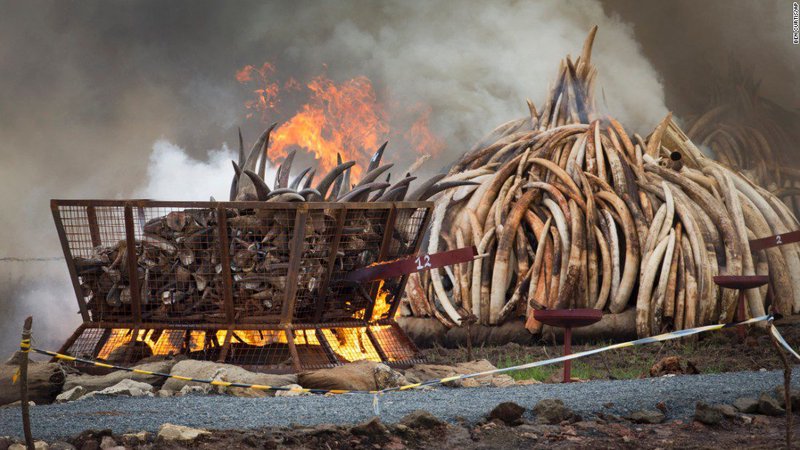
A basket of rhino horns next to a pyre of burning elephant ivory in Kenya, 2016.
Photo: Ben Curtis, AP.
What we do
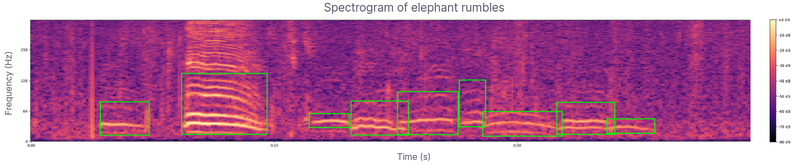
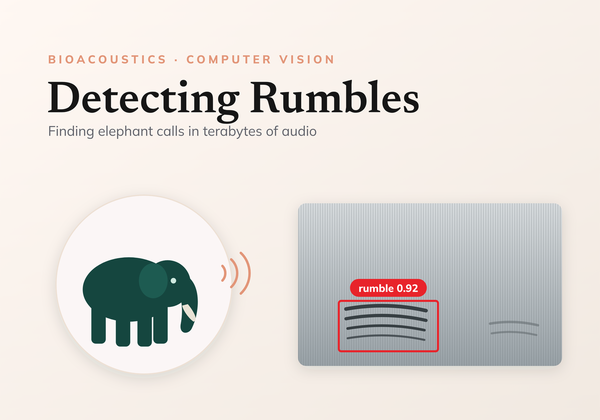
In dense forest, elephants are easier to hear than to see: they keep in touch with
low-frequency rumbles.2
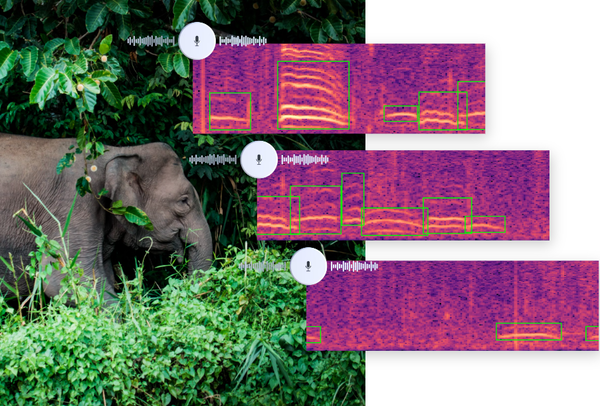
Our acoustic monitoring
work finds those rumbles in months of recordings from forest microphones, so
researchers can follow where elephants move without ever seeing one.
Conservation efforts struggle to monitor forest elephants in dense rainforests, with acoustic monitoring providing a promising solution via accurate, user-friendly detection systems that aid in population monitoring and anti-poaching efforts while mitigating human-elephant conflicts.
Every project here was built hand in hand with conservation partners, and much of the code is open source. If our work fits a challenge you're facing, or you'd like to build something together, we'd love to hear from you.